Published: March 2, 2026 | Michael White, ISA Certified Arborist KY-0847A, Kentucky Master Gardener
The Quiet Transformation Happening Beneath Your Lawn
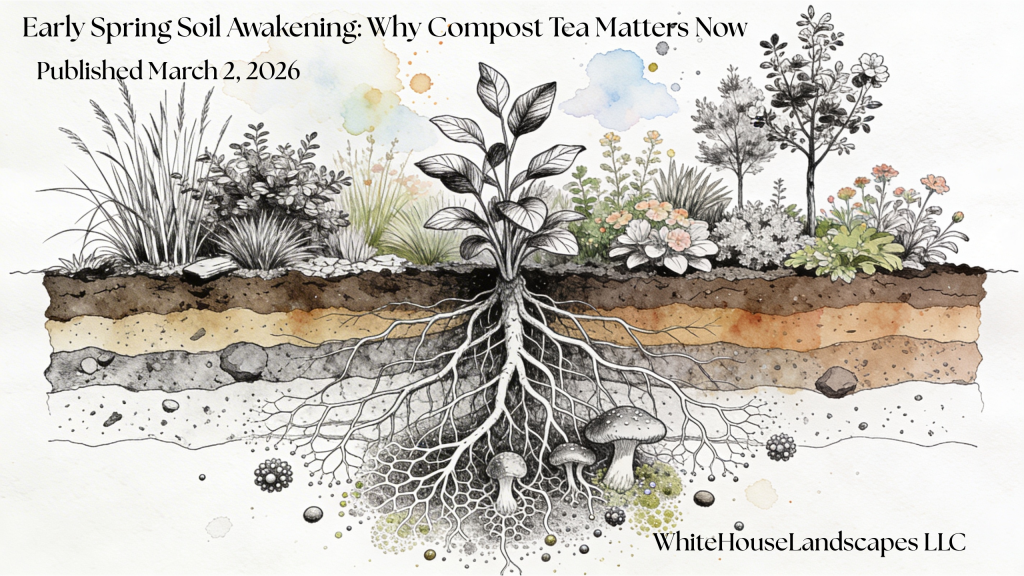
If you’ve lived in Northern Kentucky long enough, you know that late February brings those first deceptive warm days—temperatures climbing into the low 50s, a few brave daffodil shoots breaking through the mulch, and that unmistakable earthy smell when the ground begins to thaw. While most homeowners are still weeks away from thinking about lawn care, something remarkable is already happening six inches below the surface of your property.
Your soil is waking up.
And right now—before the spring rush, before the weeds emerge, before disease pressure builds—is the single most important time to support that awakening with compost tea applications.
The Hidden World That Powers Your Landscape
Most property owners think of soil as dirt—an inert substance that simply holds plants in place. But healthy soil is actually a living ecosystem more complex than the Amazon rainforest. Every teaspoon of quality soil contains more microorganisms than there are people on Earth: billions of bacteria, miles of fungal networks, protozoa, nematodes, and other creatures working in harmony.
These aren’t just passengers. They’re the engine that powers everything you see above ground.
Here’s what happens when soil temperatures reach 45-50°F in Northern Kentucky (typically mid-February through early March):
- Beneficial bacteria populations begin multiplying exponentially
- Mycorrhizal fungi—nature’s underground internet—start colonizing root systems
- Soil aggregates reform after winter freeze-thaw cycles, improving structure
- Nutrient cycling restarts as microbes break down organic matter
- Plant roots begin their first flush of spring growth, actively seeking microbial partnerships
This is when your soil biology needs support most. Winter has been harsh. Freeze-thaw cycles have disrupted fungal networks. Bacterial populations are at their annual low point. And your landscape plants are about to demand enormous resources for spring growth, flowering, and leaf-out.
Compost tea is a direct infusion of billions of beneficial microorganisms, along with the organic compounds that feed them. Think of it as a probiotic for your soil—except instead of supporting your gut health, it’s rebuilding the living system that feeds your trees, shrubs, and lawn.
When we brew quality compost tea, we’re cultivating:
- Aerobic bacteria (50,000-500,000 per milliliter) that cycle nutrients and outcompete pathogens
- Beneficial fungi that extend root systems up to 1,000 times their natural reach
- Protozoa that regulate bacterial populations and release plant-available nitrogen
- Enzymes and organic acids that unlock bound nutrients in your soil
What This Means for Your Property: Four Immediate Benefits
1. Explosive Root Development Before the Spring Growth Surge
Your trees and shrubs don’t wait for perfect conditions to begin spring growth. Root flush often starts 3-4 weeks before you see any above-ground activity. Early compost tea applications ensure beneficial mycorrhizal fungi colonize new root tissue immediately, creating partnerships that will support your plants through the entire growing season.
What you’ll notice: Landscape plants leaf out 7-10 days earlier with notably darker green foliage. Lawns begin greening up while your neighbors’ are still brown, without the artificial push of synthetic nitrogen.
2. Disease Suppression Before Pathogens Establish
Spring diseases like apple scab, black spot on roses, and early lawn fungal issues don’t appear randomly. They establish when conditions favor them and beneficial microbes are still dormant. By flooding your soil and leaf surfaces with beneficial organisms in early March, you occupy the ecological niches that pathogens would otherwise claim.
This is competitive exclusion—filling your ecosystem with the good guys before the bad guys arrive.
What you’ll notice: Dramatically reduced fungal disease pressure on roses, crabapples, and other susceptible ornamentals. Fewer fungicide applications needed (or none at all). Healthier spring lawn green-up without brown patch or other early-season diseases.
3. Enhanced Nutrient Availability Without Synthetic Fertilizers
Northern Kentucky soils are notoriously heavy clay with locked-up nutrients. Your soil test might show adequate phosphorus and potassium, but your plants can’t access them without robust microbial activity. Compost tea bacteria and fungi produce organic acids and enzymes that solubilize these bound nutrients, making them plant-available.
What you’ll notice: Plants perform as if fertilized, but with sustained growth rather than the boom-bust cycle of synthetic applications. Improved stress tolerance. Better color and vigor without the excessive top growth that attracts pests.
4. Improved Soil Structure for the Entire Growing Season
Our heavy Faywood and Cincinnati soils compact easily and drain poorly. Beneficial fungi produce glomalin—a glycoprotein that acts as nature’s glue, binding soil particles into stable aggregates. This creates pore space for air and water movement, supporting healthy root systems.
This isn’t a one-application fix, but early spring applications give beneficial fungi the foothold they need to begin improving soil structure throughout the growing season.
What you’ll notice: Better water infiltration during spring rains. Reduced puddling and runoff. Improved drought tolerance later in summer as soil holds moisture more effectively.
Timing Your Applications for Maximum Impact
In USDA Zone 6b (Northern Kentucky), here’s your optimal early spring window:
First Application: February 20 – March 10
- Soil temperatures: 45-50°F (use a soil thermometer 4″ deep)
- Target: Dormant root zone and soil surface
- Goal: Establish beneficial populations before spring flush
Second Application: March 15 – April 5
- Soil temperatures: 50-60°F
- Target: Active root zone plus emerging foliage (shrubs/trees beginning bud break)
- Goal: Support first growth flush, establish foliar microbiome
Why timing matters: Apply too early (soil below 45°F) and beneficial microbes remain dormant. Apply too late (after leaf-out) and you’ve missed the critical root colonization window. You’re still getting benefits, but you’ve surrendered your competitive advantage against pathogens.
The sweet spot is when you see forsythia blooming and soil is workable but most landscape plants haven’t broken dormancy. That’s your signal.
What Kind Of Results Could You Expect?
While we’re launching our formal compost tea program this March, the science behind these applications is well-established. University trials consistently show:
- 15-30% reduction in irrigation requirements
- 40-60% reduction in disease pressure on susceptible plants
- Measurable improvement in soil organic matter within one season
- Enhanced establishment of new plantings with improved survival rates
Your Next Step: Limited Early-Season Availability
We’re accepting just 12 new organic plant health care clients for our March application window. This limited capacity ensures we can deliver the hands-on attention and quality control that compost tea applications require.
Our early spring program includes:
- ✓ Property assessment and customized application plan
- ✓ Two early-season compost tea applications (late Feb/early March + late March/early April)
- ✓ Soil biology analysis and recommendations
- ✓ Season-long consultation on organic landscape management
- ✓ Documentation of results for your property
Early adopter pricing: $299 for both applications (regularly $399) – Available only for applications scheduled by March 15, 2026
The biological window is narrow. Soil is awakening right now. The question is whether you’ll support that awakening with the living systems your landscape needs—or leave it to chance.
Schedule your consultation: Call (859) 444-0486 or email business@whitehouselandscapes.com
WhiteHouse Landscapes LLC serves Florence, Union, Burlington, and surrounding Boone County communities with science-based organic plant health care. Michael White is an ISA Certified Arborist (KY-0847A) and Kentucky Master Gardener with over 30 years of horticultural experience.